My Research
My research interests focus on star and planet formation, with a particular emphasis on the earliest stages of star formation and the evolution of a protoplanetary disk around the young protostar.
I perform detailed nonideal magnetohydrodynamic (MHD) simulations of core collapse to understand the role of gravity, magnetic fields, and thermal pressure in the formation of protostars (pre-main sequence stars).
In addition, I also study long-term evolution of gas-dust magnetized protoplanetary disks to understand the accretion mechanisms of young stars—such as episodic outbursts—and its consequences on the the dust growth and streaming instability.
These processes are central to the formation of first-generation planetesimals, the building blocks of planets.
I also study how molecular clouds undergo magnetized gravitational fragmentation to form dense prestellar cores—the birthsites of star formation.
My aim is to connect observations and theory of star-disk systems by exploring the underlying physics through theoretical and numerical modeling. I have also worked with the observers to help disentangle complex collapse kinematics observed in young protostellar systems.
If you're interested, you can check out my publications here.
Science Keywords: Star formation, Planet formation, Magnetic fields, Nonideal MHD effects, Episodic accretion outbursts, Protoplanetary disks, Dust dynamics
Technical Keywords: Computational Astrophysics, MHD simulations, Astaroth GPU Code, Semi-analytical Modelling
Here I summarize the some of the key works that I have carried out with my collaborators.
1. Modelling the Break in the Angular Momentum within the Envelope-Disk Transition Zone
Das, Basu, Ohashi, et al. ApJ, 2026
 ALMA Reveals How Planet-Forming Disks Take Shape (ALMA Observatory)
News on Unveiling the Mystery of Protoplanetary Disk Formation Around Young Stars (ALMA-NAOJ; ALMA node of East Asian region)
Astronomers crack a decades-old mystery, catching gas morphing into planet-building disks around newborn stars (Phys.org)
How a Cosmic Cloud Becomes a Solar System: Scientists Discover the “EnDTranZ” Missing Link (CITA/ICAT, Canada)
Unveiling the Mystery of Protoplanetary Disk Formation Around Young Stars (ASIAA, Taiwan)
Rätsel der Entstehung protoplanetarer Scheiben um junge Sterne gelöst (U. of Innsbruck, Austria)
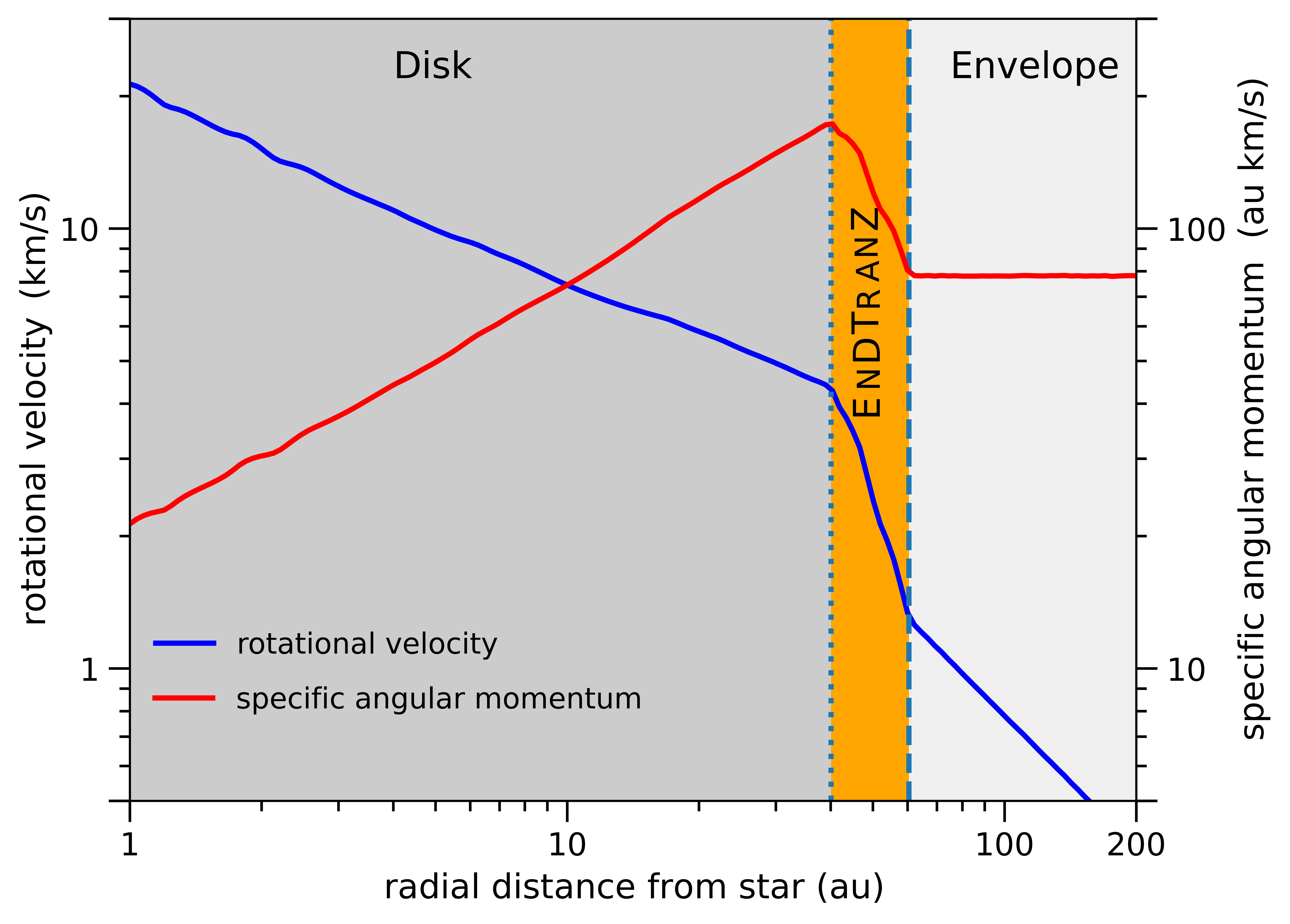
We investigate the radial profile of specific angular momentum (j-r) during star-disk formation
using global MHD disk simulations and found that there exists an
envelope-disk transition zone (EnDTranZ) where
the transition from the infalling-rotating envelope (where rotational velocity vφ ~ r-1 or j ~ const.) to Keplerian disk
(where vφ ~ r-1/2 or j ~ r1/2) gradually happens through a jump in the j-r profile and the infall velocity
(vr) gradually decelerates over an extended region from the outer radius of transition zone (rOTZ) to the model centrifugal barrier (rCB)
rather than abruptly impacting the rotationally supported disk such that the transition in vφ from ~ r-1 to ~ r-1/2
gradually happens over a finite radial zone. In addition, our numerical simulations that considers the fluid treatment that includes the physics of gas pressure gradient, disk self-gravity, GI,
viscous accretion etc., yield a centrifugal radius to centrifugal barrier ratio (rCR/rCB) of 1.1-1.5 that differs from rCR/rCB=2
based on the classical point particle approach.
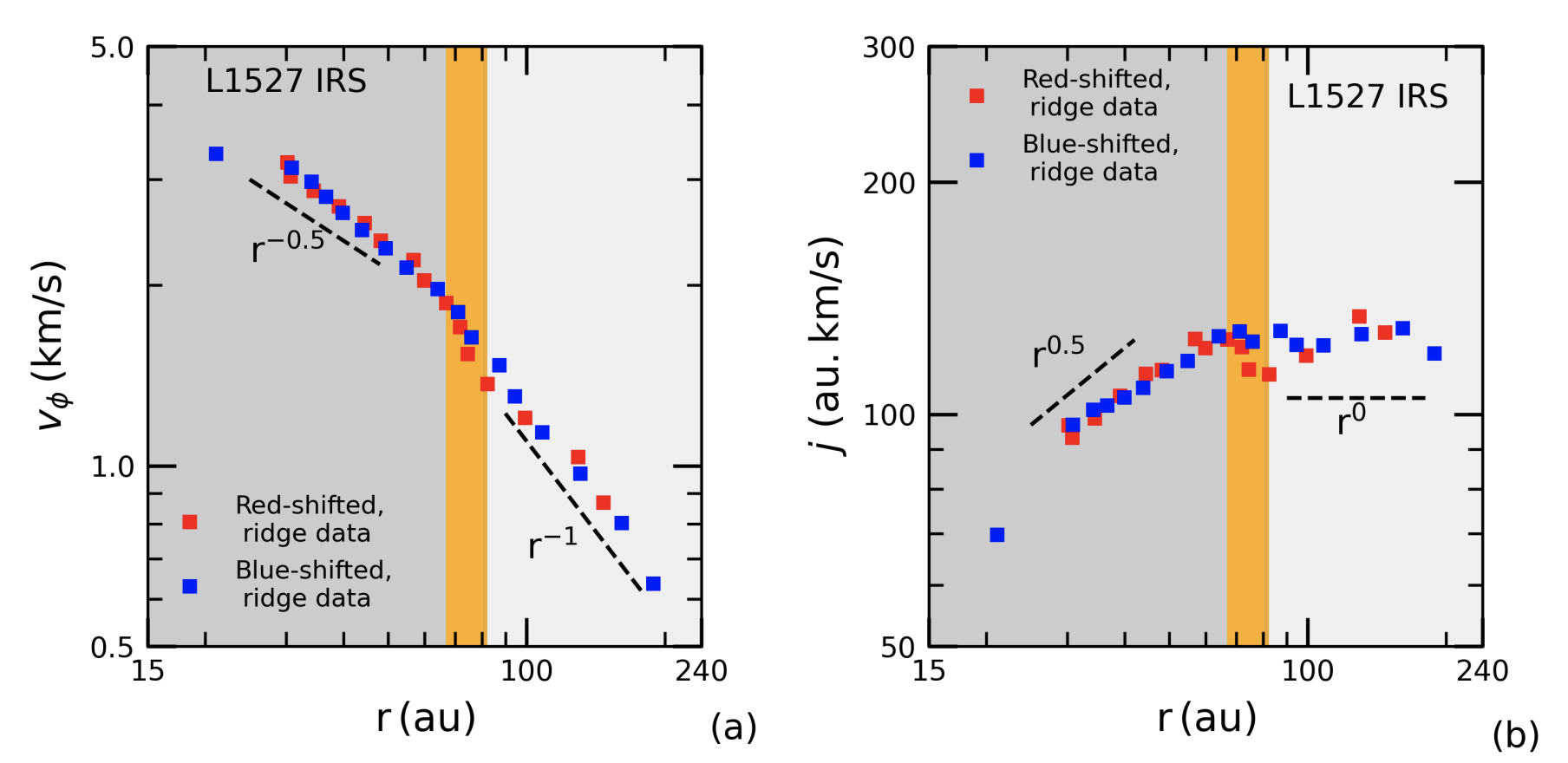
On the observational ground, we identify a j-r jump in the observed j-r profile
of class 0/I protostar L1527 IRS from the ALMA Large Program eDisk (Embedded disks in early planet formation) observations that can be used as a
kinematical tracer for the existence of EnDTranZ in the young protostellar systems. This is the first study to demonstrate the physics of
ENDTRANZ and its consistent observational evidence that highlights the first detection of ENDTRANZ tracer from the eDisk Survey.
2. Evolution of Protoplanetary Disks and Prospects of Planetesimal Formation
Das, Vorobyov, & Basu, ApJ, 2025
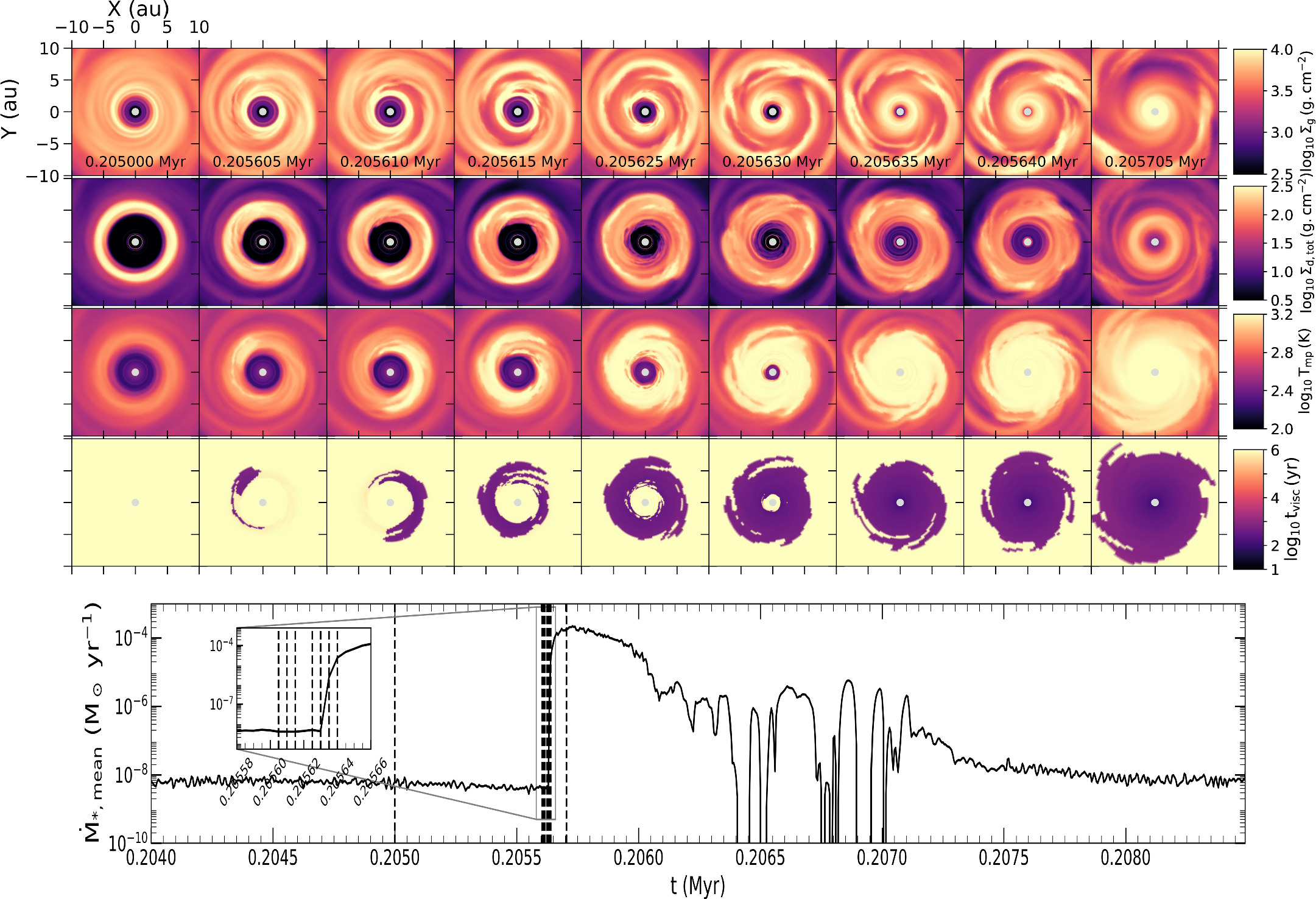
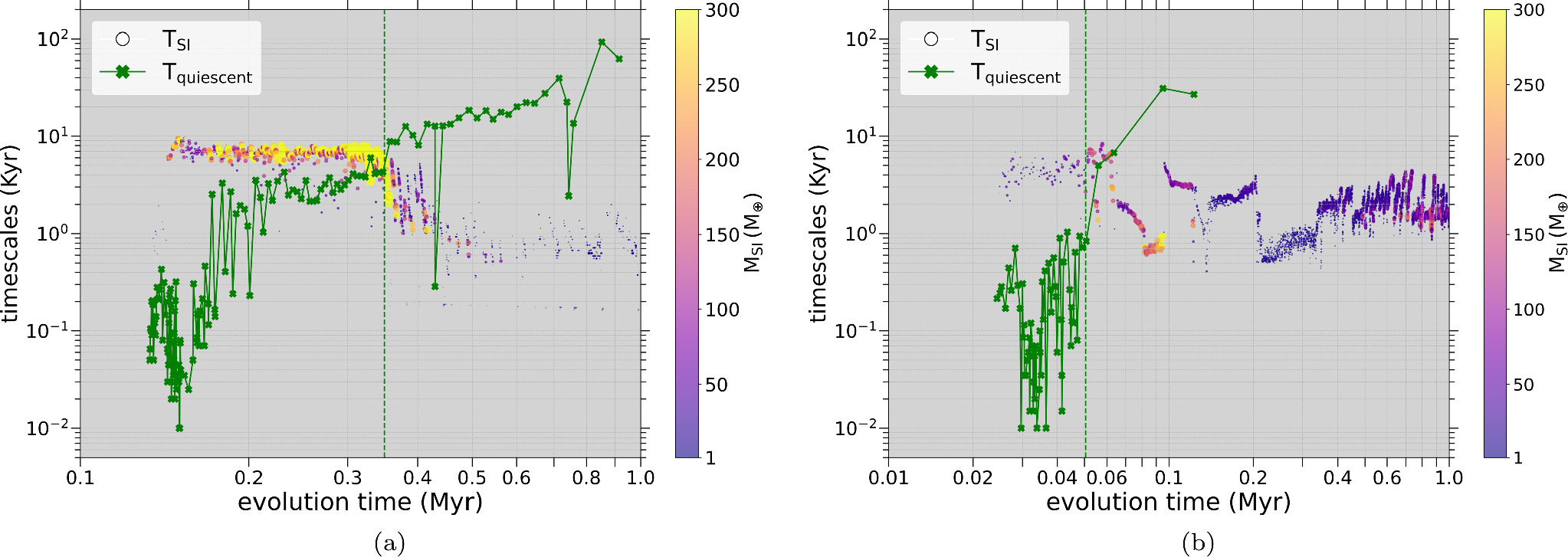
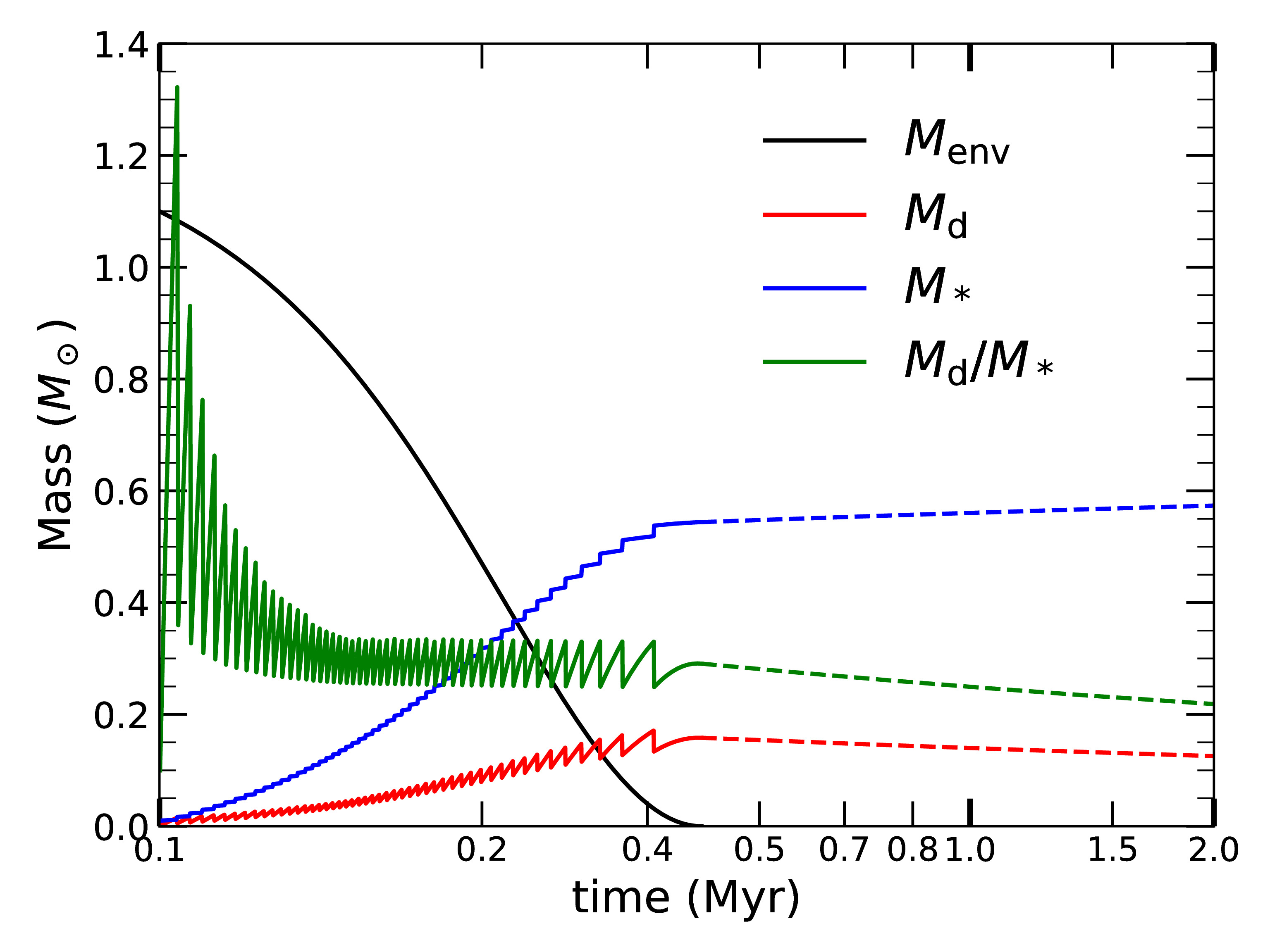
In this work, we investigated We investigate the occurrence of accretion bursts, dust accumulation, and the prospects for planetesimal formation
in a gravitationally unstable magnetized protoplanetary disk (PPD) with globally suppressed but episodically triggered magnetorotational instability (MRI),
particularly in young intermediate-mass stars (YIMSs) but with a comparison to its low-mass cousins.
Massive gas concentrations and dust rings form within the inner disk region owing to the radially varying efficiency of mass transport by gravitational instability.
These rings are initially susceptible to streaming instability (SI). The ensuing MRI bursts destroy the dust rings, making planetesimal formation via SI problematic.
In the later evolution phase, when the burst activity starts to diminish, SI becomes inefficient because of growing dust drift velocity and a more extended inner dead zone,
both acting to reduce the dust concentration below the threshold for the SI to develop. Low-mass objects appear to be less affected by these adverse effects.
Our results suggest that disks around YIMSs may be challenging environments for planetesimal formation via SI.
This may explain the dearth of planets around stars with M★ > 3M⊙.
3. How Does a Protostar Form though Magnetized Gravitaional Collapse?
Das, Shang, & Krasnopolsky, ApJ, 2025
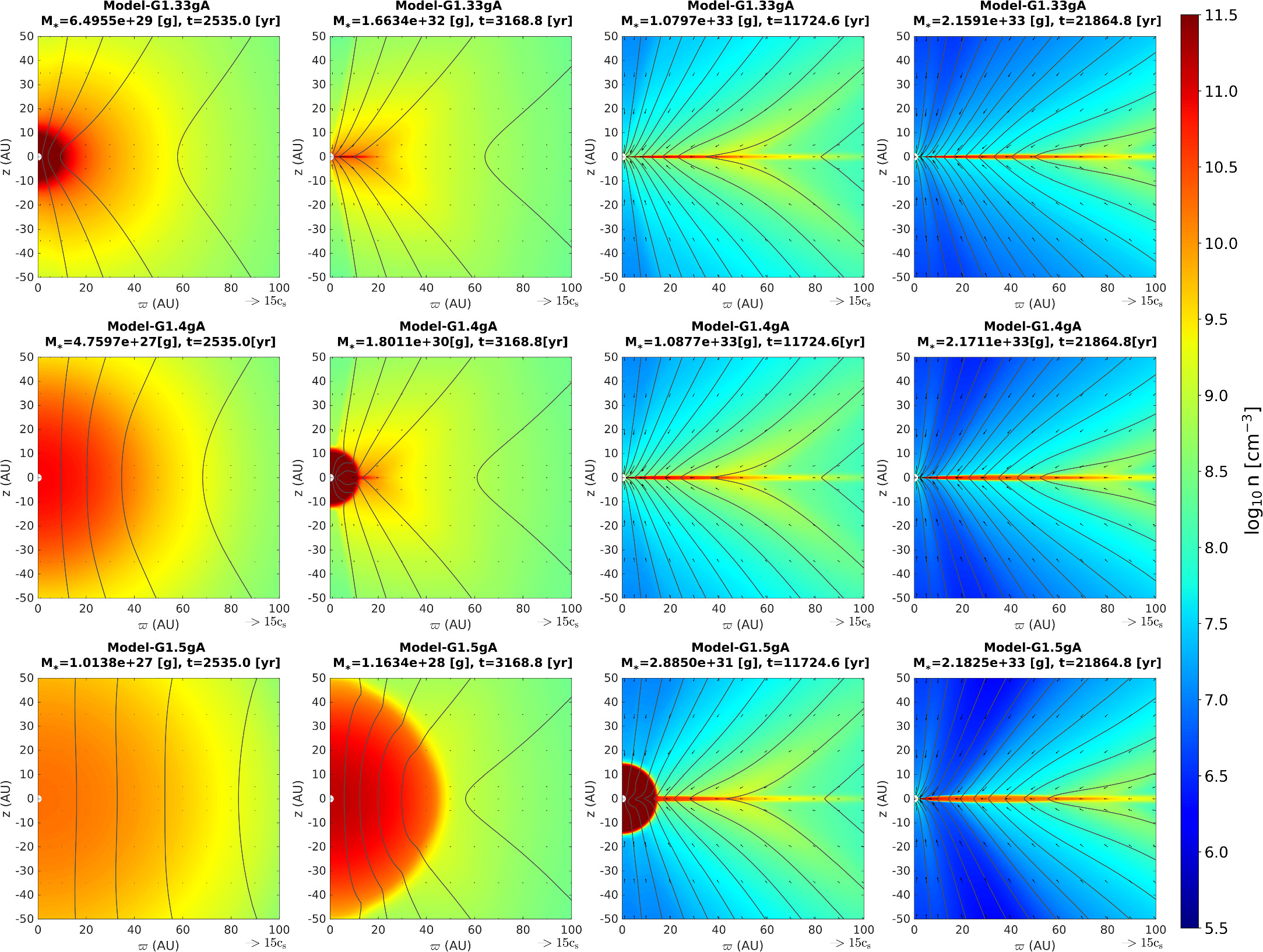
The enigma of star formation in galaxies continues to captivate astronomers around the world, with a fundamental question remaining: how do self-gravity, magnetic fields, and thermal pressure play a role in protostar formation?
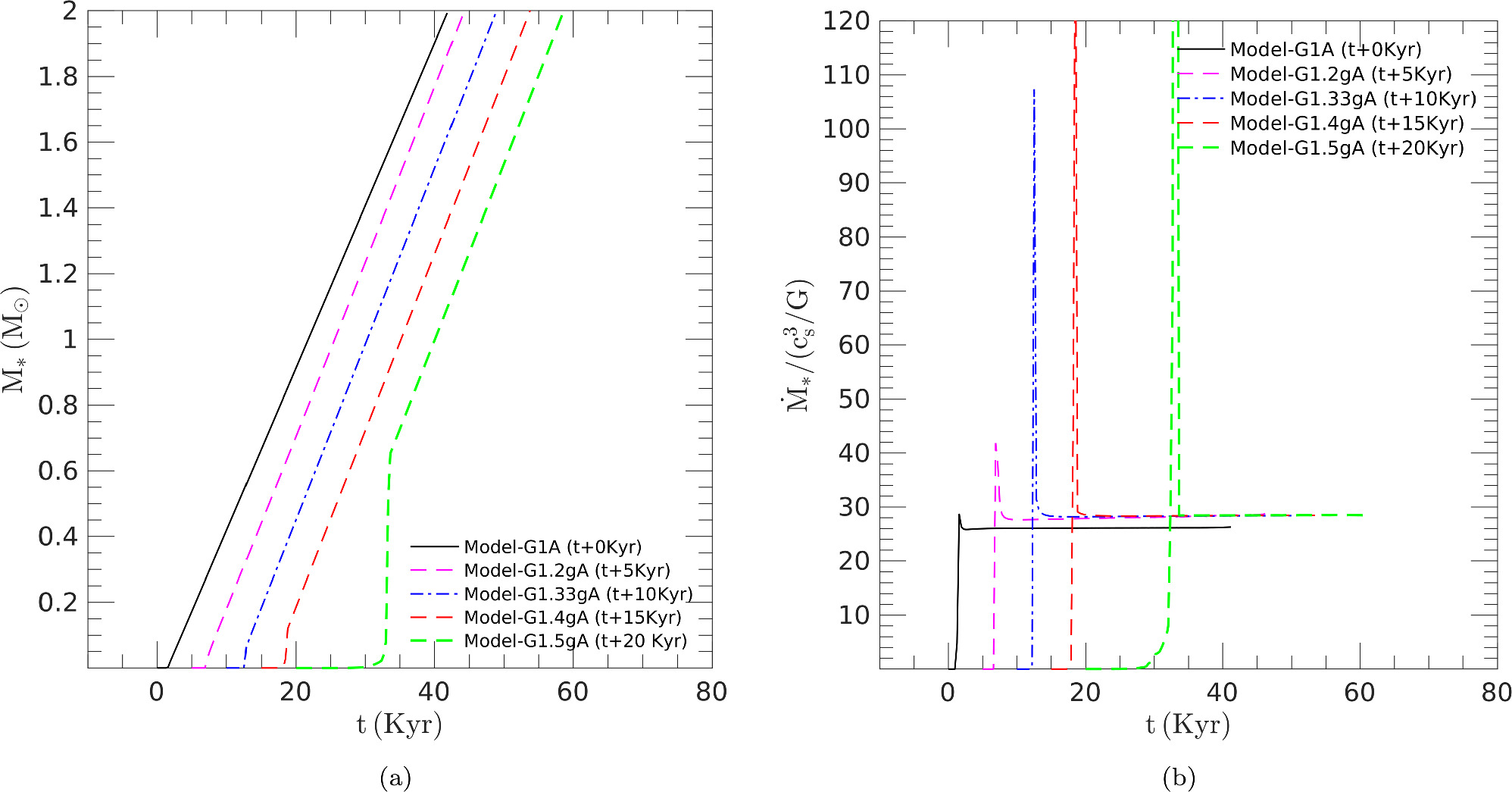
Our work reveals a constraint on the degree of non-isothermality in the choice of Equation of states (EOSs), that says a polytropic monoatomic index of Γ no stiffer than 4/3, complemented by the magnetized virial theorem,
ensures sufficient cooling in allowing a protostar to form and grow continuously through the magnetized gravitational collapse of interstellar molecular gas clouds. The global MHD collapse models with a Γ softer than or equal to 4/3,
the infall dynamics qualitatively follow the behaviour of the isothermal case. However, for the model collapse with a Γ harder than 4/3,
causes a reduction in the mass accretion rate into the central (point-mass like) protostar, thus delaying the collapse.
At the scales of protostar’s surface, which is likely several solar radii, the heating from the
accumulated material within may begin to significantly
influence the EOS by transitioning to the regime of
nonisothermality. However, this regime of nonisothermality
may remain confined to within the protostar’s surface only,
similar to the case of a chromosphere, and certainly does not
impede the mass infall during collapse.
4. A semi-analytical model for the temporal evolution of the episodic disc-to-star accretion rate during star formation
Das & Basu, MNRAS, 2022
In this work,
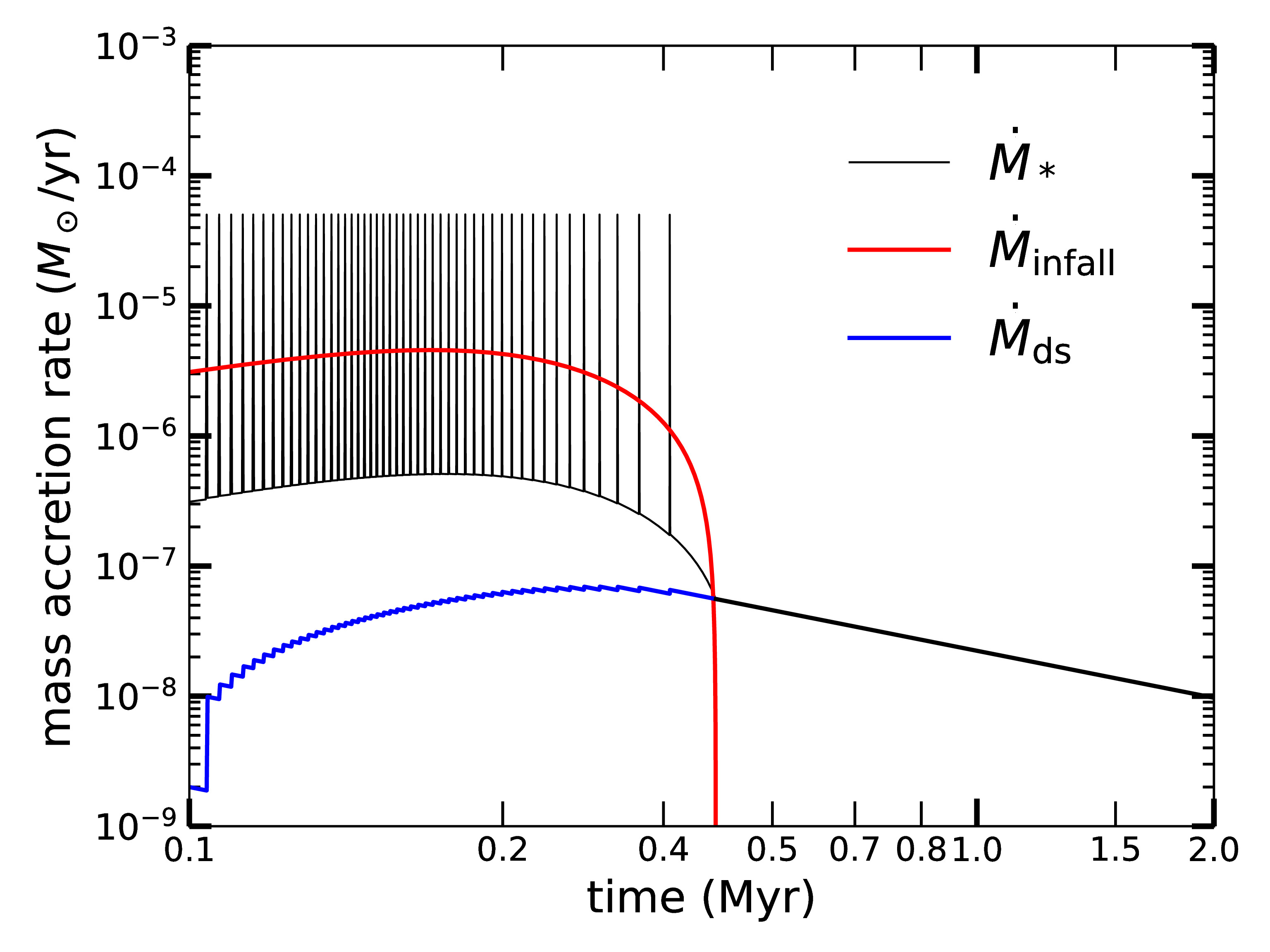
we developed a semi-analytic formalism (refer to Figure 6 for the numerical prescription) for episodic accretion from disk to star during star formation.
Our model provides a self-consistent evolution of the mass accretion rate by joining the spherical envelope accretion (dominant at the earlier stage)
with the disk accretion (important at the later stage) and accounts for the (gravitational instability driven) episodic accretion bursts at times.
Our self-developed model can explain the basic features of the hydrodynamic simulations of episodic accretion (e.g., Vorobyov & Basu 2005, 2006, 2007).
We find that the histogram of total luminosities obtained from our semi-analytic model provides a good match to the observed distribution of bolometric luminosities of YSOs,
whereas neither a constant nor a time-dependent but smoothly increasing or decreasing mass accretion rate is able to do so.
5. Variation of the Core Lifetime and Fragmentation Scale in Molecular Clouds as an Indication of Ambipolar Diffusion
Das, Basu, & André, A&A Letters, 2021
Fragmentation in large molecular clouds probed by SMA, ALMA, VLA, JCMT, and Herschel has been of great interest in recent years.
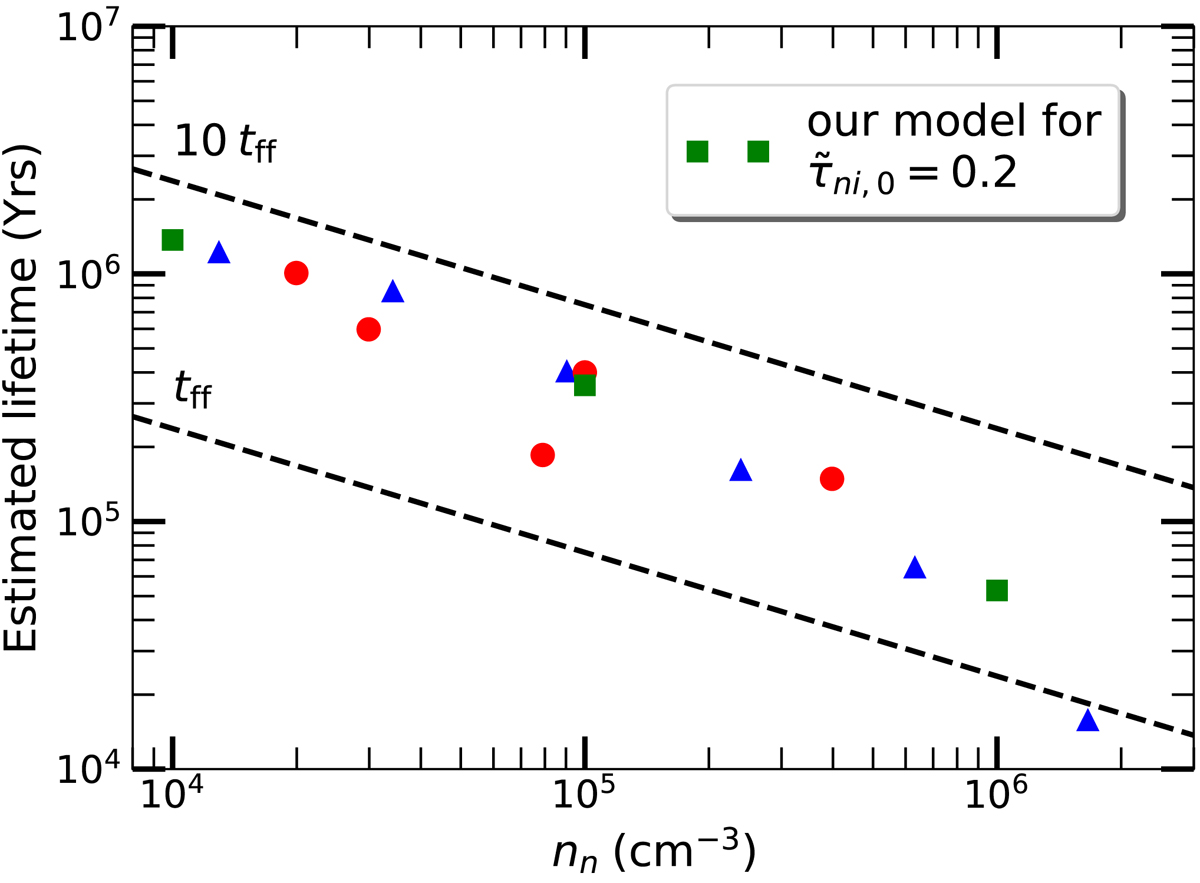
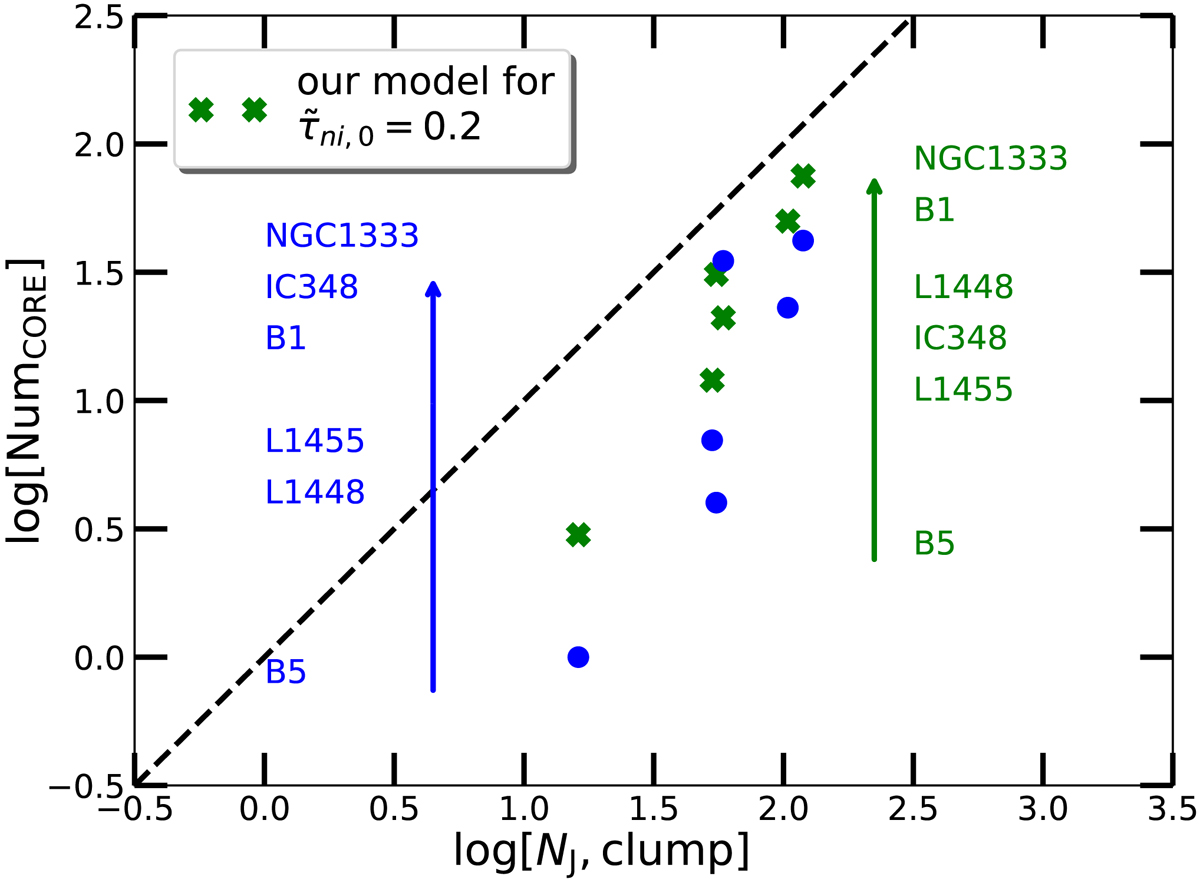
In this work, we apply the magnetically (nonideal MHD) modulated threshold for fragmentation scale (length scale, time scale, and mass) to fit the data of the evolutionary time/lifetime and fragmentation mass of prestellar cores identified with Herschel Space Observatory in the Aquila cloud
as well as the number of enclosed cores formed in a parent clump measured in Perseus cloud complex with the Submillimeter Array (SMA).
By varying a single parameter, the normalized mass-to-flux ratio (lying in the range 1 ≤ μ ≤ 2), over the range of observationally measured densities,
we fit the range of prestellar core lifetimes that varies from 0.1 to a few Myr.
Moreover, we found the estimated lifetime is few times the free-fall toward the low density regime and essentially merges with the free-fall time toward the higher end of density.
This cannot be explained in a purely hydrodynamic scenario.
6. Linear Stability Analysis of a Magnetic Rotating Disk with Ohmic Dissipation and Ambipolar Diffusion
Das & Basu, ApJ, 2021
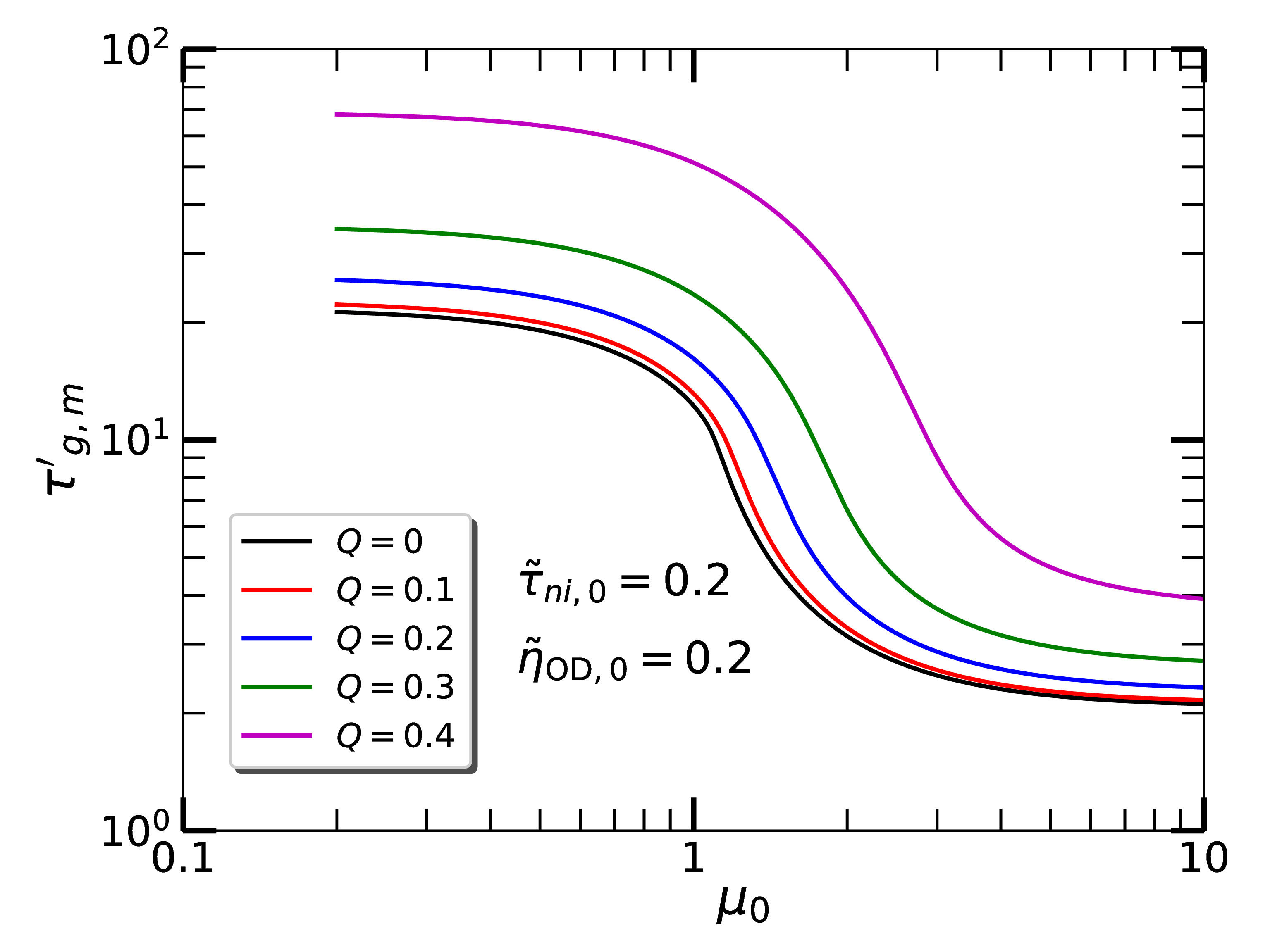
We perform a linear analysis of the stability of isothermal, rotating, magnetic, self-gravitating sheets that are weakly ionized.
We include a self-consistent treatment of thermal pressure, gravitational, rotational, and magnetic (pressure and tension) forces together with two
nonideal magnetohydrodynamic (MHD) effects: Ohmic dissipation and ambipolar diffusion. Our results show that there is always a preferred
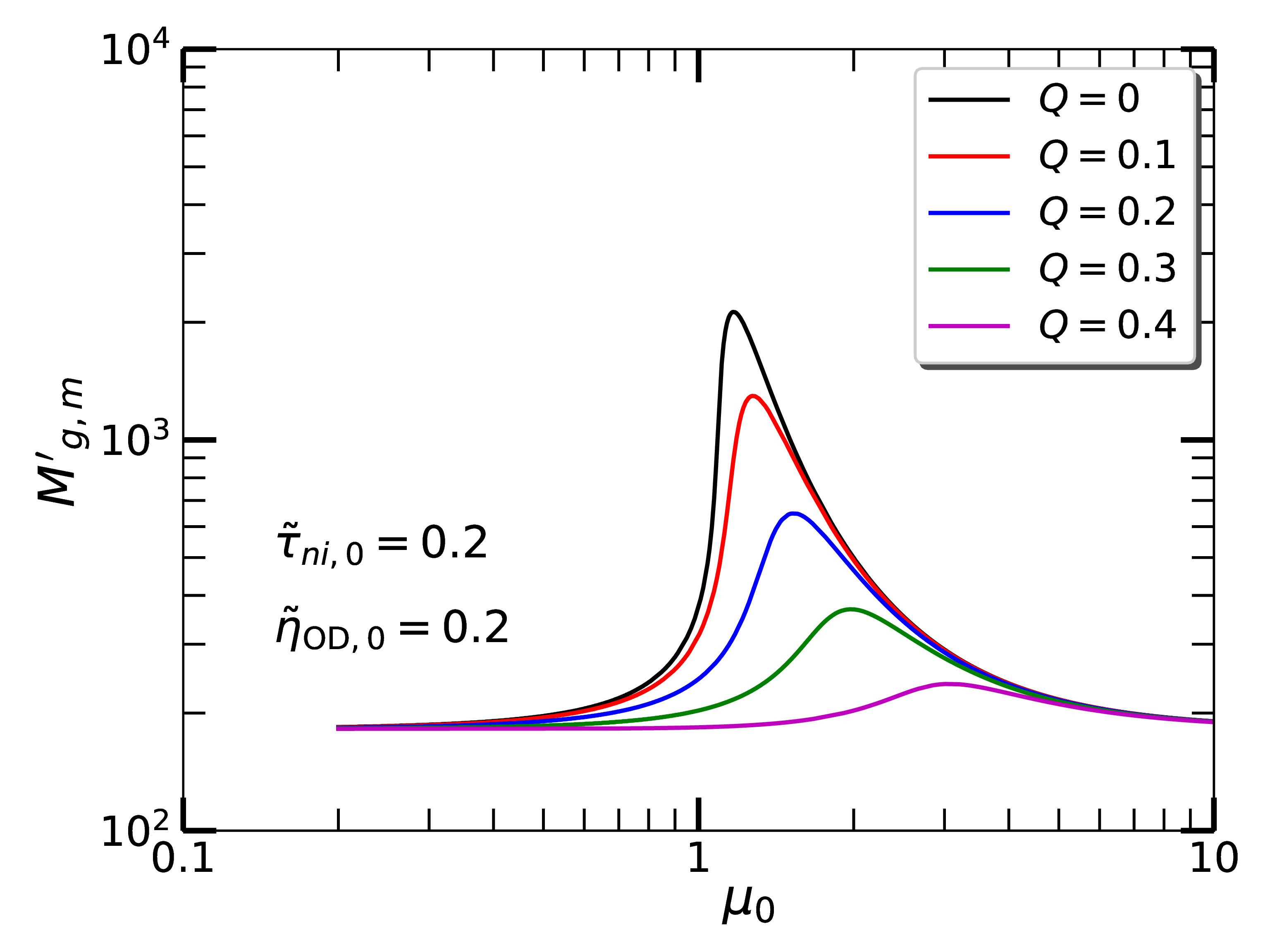
lengthscale and associated minimum timescale for gravitational instability. The addition of rotation leads to a generalized Toomre criterion (that includes a
magnetic dependence) and modified lengthscales and timescales for collapse. We show that both the nonideal MHD effects qualitatively behave in a
similar way but have quantitative differences. We apply our results to protostellar disk properties in the early embedded phase and find that the preferred scale
of instability can significantly exceed the thermal (Jeans) scale and the peak preferred fragmentation mass is likely to be ~10–90 Jupiter masses.
Stay tuned — more content is on the way!

 ADS Library
 ORCID Profile
 Google Scholar Profile